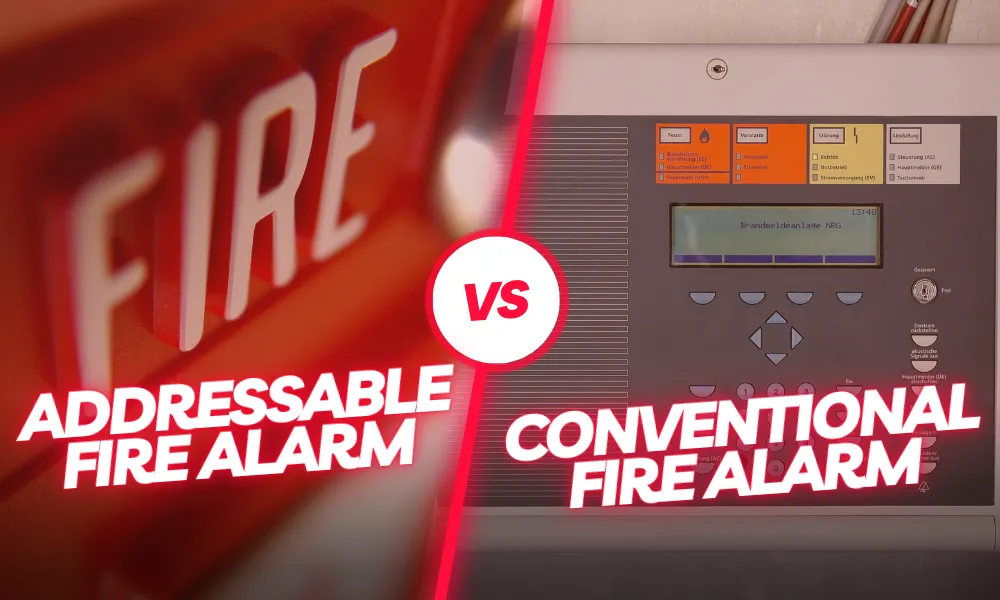
Fire Alarm Systems Explained: Addressable vs Conventional Fire Alarm System
Fire alarm systems are one of the most important components of any fire safety setup. They are designed to detect fire at an early stage, alert occupants immediately, and help prevent major damage to life and property. In modern buildings such as offices, factories, hospitals, hotels, and shopping complexes, fire alarm systems are essential for ensuring safety and compliance with fire regulations.
At Pavlo Engineers Private Limited, we provide advanced fire alarm solutions designed for reliable performance and quick emergency response. Two of the most commonly used systems are Addressable Fire Alarm Systems and Conventional Fire Alarm Systems. Understanding the difference between these two systems is important for selecting the right solution for your building.
What is a Fire Alarm System
A fire alarm system is a network of devices that work together to detect smoke, heat, or fire and generate an alert. It typically includes detectors, manual call points, control panels, and alarm devices such as hooters or sounders. The main purpose of a fire alarm system is early detection and quick notification so that people can evacuate safely.
Conventional Fire Alarm System
A Conventional Fire Alarm System divides a building into different zones. Each zone is connected to the control panel, and when a detector is triggered, the panel shows which zone has the fire signal. However, it does not show the exact location of the fire device.
Key Features of Conventional Fire Alarm System
Zone-based fire detection
Simple and cost-effective solution
Easy installation and maintenance
Suitable for small to medium-sized buildings
Applications
Offices, small commercial buildings, shops, schools, warehouses, and residential complexes
Conventional systems are ideal for basic fire detection needs where detailed location tracking is not required.
Addressable Fire Alarm System
An Addressable Fire Alarm System is a more advanced solution where each device has a unique address. This allows the system to identify the exact location of the fire or fault within the building.
Key Features of Addressable Fire Alarm System
Exact location identification of fire
Advanced monitoring and control
Faster response and decision-making
Suitable for large and complex buildings
Reduced chances of false alarms
Applications
High-rise buildings, hospitals, hotels, airports, shopping malls, factories, and large industrial facilities
Addressable systems are ideal where precision, speed, and advanced monitoring are required.
Key Differences Between Addressable and Conventional Systems
Conventional systems provide zone-level detection, while addressable systems provide exact device-level identification. Conventional systems are simpler and more affordable, whereas addressable systems offer advanced features and higher accuracy.
Choosing between the two depends on building size, risk level, and safety requirements.
Which Fire Alarm System is Better
Both systems are effective in their own use cases. For small buildings, conventional fire alarm systems are sufficient and cost-effective. For large buildings or high-risk environments, addressable fire alarm systems are the better choice due to their advanced monitoring and precise detection capabilities.
A proper fire safety plan should always be designed based on professional assessment to ensure maximum protection.
Conclusion
Fire alarm systems are essential for protecting lives and property in any building. Understanding the difference between addressable and conventional systems helps in selecting the right solution for your needs.
At Pavlo Engineers Private Limited, we offer both conventional and addressable fire alarm systems designed to meet industry standards and ensure reliable fire safety performance across all types of projects.