Fire Alarm Maintenance Checklist for Offices & Factories
Fire Alarm Maintenance Checklist
A fire alarm system is one of the most important parts of a building’s fire protection setup. It provides early warning when smoke, heat or fire is detected, allowing people to respond quickly and evacuate safely.
However, simply installing a fire alarm system is not enough. Regular inspection, testing and maintenance are essential to ensure that detectors, control panels, manual call points, hooters and other devices remain operational when they are needed most.
For offices and factories, a proper fire alarm maintenance checklist can help facility managers identify faults early and maintain a reliable fire detection system.
Why Is Fire Alarm Maintenance Important?
Fire alarm systems can develop faults due to dust, damaged wiring, battery problems, environmental conditions, component failure or lack of regular testing.
Regular maintenance helps:
- Detect faulty devices early
- Reduce the risk of system failure
- Ensure alarms operate during emergencies
- Identify damaged detectors and wiring
- Maintain reliable communication between devices and the control panel
- Improve workplace fire safety
- Maintain proper maintenance records
Pavlo Engineers provides conventional and addressable fire alarm systems for offices, factories, warehouses, hospitals, hotels, schools and other buildings.
Fire Alarm Maintenance Checklist for Offices
Office buildings may have multiple floors, workstations, electrical equipment and a large number of occupants. Regular testing is therefore important.
1. Check the Fire Alarm Control Panel
Inspect the control panel for:
- Fault indicators
- Fire alarm indications
- Power supply status
- Battery condition
- Warning signals
- Communication faults
Any fault displayed on the panel should be investigated and rectified by a qualified technician.
2. Test Smoke Detectors
Smoke detectors should be checked to ensure they can detect smoke correctly.
Inspect for:
- Dust accumulation
- Physical damage
- Obstructions
- Loose connections
- Fault indications
Detectors should remain unobstructed and properly positioned.
3. Inspect Heat Detectors
Heat detectors should be checked for physical damage, contamination and proper operation.
The testing method should follow the manufacturer’s recommendations and the requirements applicable to the installed system.
4. Test Manual Call Points
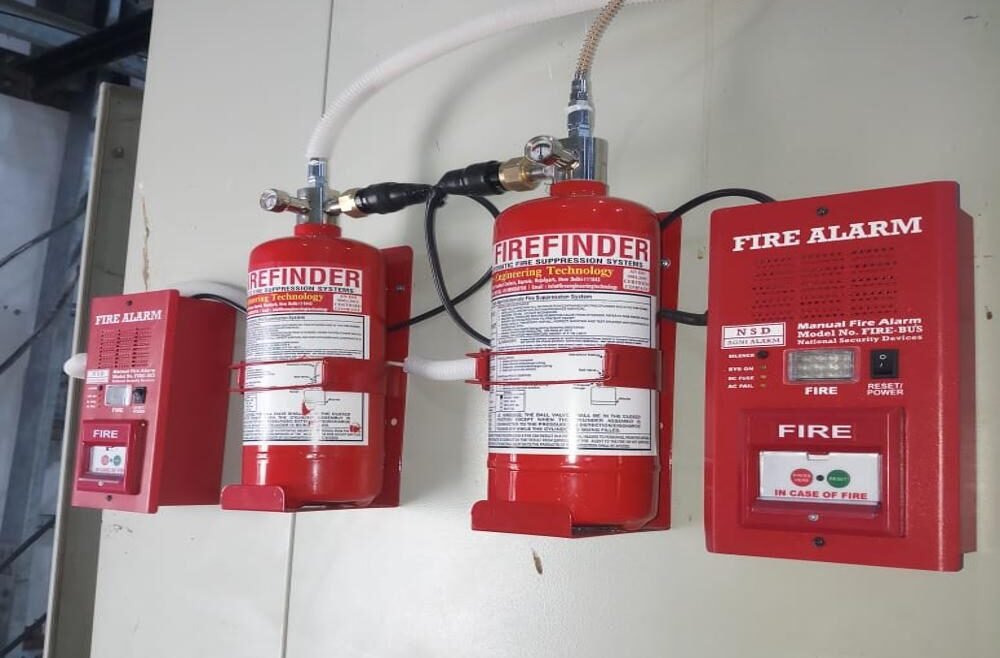
Manual Call Points allow occupants to activate the fire alarm manually during an emergency.
Check that:
- MCPs are accessible
- They are clearly visible
- They are not blocked
- The alarm activates correctly
- The control panel receives the signal
5. Test Hooters and Sounders
Alarm sounders should provide an audible warning throughout the required areas.
Check whether:
- Sounders operate correctly
- The alarm can be heard in occupied areas
- There are damaged devices
- Any area has insufficient alarm coverage
Visual alarm devices should also be checked where they are part of the system.
6. Check Batteries and Power Supply
The fire alarm system should have a reliable power supply and suitable backup power.
Inspect:
- Main power supply
- Backup batteries
- Battery terminals
- Charging condition
- Battery fault indications
Weak or damaged batteries should be replaced as required.
7. Inspect Wiring and Connections
Check accessible wiring, connections and system components for signs of:
- Damage
- Loose connections
- Corrosion
- Tampering
- Physical deterioration
Any electrical work should be carried out by qualified personnel.
Fire Alarm Maintenance Checklist for Factories
Factories can have higher fire risks because of machinery, electrical systems, combustible materials, chemicals, production processes and storage areas.
In addition to the standard checks, factory fire alarm systems should be reviewed according to the specific risks of the facility.
Important checks include:
- Fire alarm control panel
- Smoke and heat detectors
- Manual call points
- Hooters and visual alarms
- Fire alarm batteries
- Wiring and connections
- Detection coverage in production areas
- Detection coverage in storage areas
- Electrical and utility areas
- Alarm communication
- System fault history
Factories should also ensure that fire alarm devices are not blocked by machinery, stored materials or temporary structures.
Addressable vs. Conventional Fire Alarm Maintenance
Maintenance requirements can vary depending on the type of fire alarm system.
A conventional fire alarm system identifies the affected zone, while an addressable fire alarm system can identify the specific device or location reporting the fire or fault.
For addressable systems, maintenance should include checking device communication, addressing, control-panel information and system faults.
For conventional systems, technicians should check zone circuits, detectors, manual call points, alarm devices and control-panel indications.
Fire Alarm Maintenance Record
Every office or factory should maintain proper records of inspections and maintenance.
A maintenance record can include:
- Date of inspection
- Equipment checked
- Faults identified
- Repairs carried out
- Components replaced
- Battery replacement details
- Testing results
- Technician details
- Next scheduled maintenance date
Maintaining records helps facility managers track recurring issues and demonstrate that the system is being regularly maintained.
How Often Should a Fire Alarm System Be Maintained?
The maintenance frequency should depend on the type of building, fire risk, installed equipment, manufacturer’s recommendations and applicable safety requirements.
High-risk industrial facilities may require more frequent inspection and testing than smaller, low-risk premises.
A professional fire safety assessment can help determine an appropriate maintenance schedule for the specific property.
Common Fire Alarm Maintenance Mistakes
Some common mistakes include:
- Installing the system but not testing it regularly
- Ignoring fault indicators
- Allowing detectors to become covered or obstructed
- Using damaged batteries
- Blocking manual call points
- Failing to maintain inspection records
- Delaying repairs
- Not testing alarm sounders
- Allowing unqualified persons to modify the system
Regular professional maintenance can help prevent these issues and keep the fire alarm system ready for emergencies.
Professional Fire Alarm Maintenance Support
A properly maintained fire alarm system can provide reliable early warning and support a building’s overall fire protection strategy.
Pavlo Engineers provides fire alarm solutions including conventional and addressable fire alarm systems, with components such as smoke detectors, heat detectors, manual call points, control panels, hooters and visual alarm devices.
For offices, factories, warehouses, hospitals, hotels and other properties, professional inspection and maintenance can help ensure that the installed system continues to perform effectively.
Conclusion
Regular fire alarm maintenance is essential for both offices and factories. Checking the control panel, detectors, manual call points, alarm devices, batteries, wiring and system communication can help identify problems before an emergency occurs.
A fire alarm system should always be maintained according to the equipment manufacturer’s recommendations, applicable standards and local fire safety requirements.
If you need a fire alarm system, inspection, maintenance or professional fire protection solution in Kolkata, contact Pavlo Engineers to discuss your project requirements.